
Dough Divider Rounder with Auto Panning System
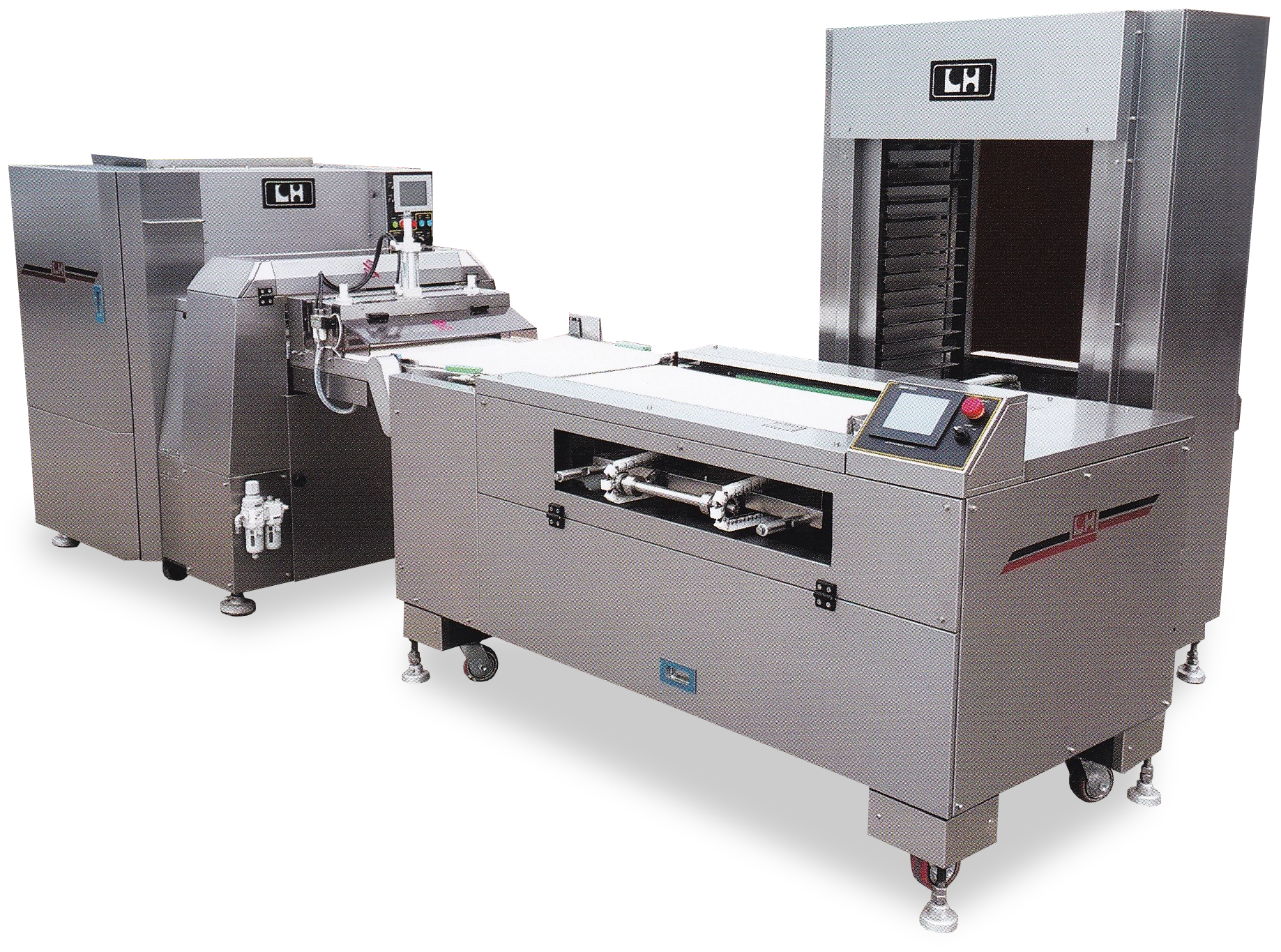
Dough Divider Rounder with Auto Panning System
Model: Dough Divider & Rounder with Auto Panning System
Elevate Your Baking Efficiency with Seamless Automation
The Dough Divider Rounder with Auto Panning System combines dough dividing and rounding with an optional automated panning system for arranging processed dough pieces onto baking trays.
The Auto Panning System can be assessed for use with a dough divider rounder or other suitable upstream equipment, including encrusting machines. Its configuration depends on the product weight, dough formulation, tray type and upstream machine requirements.
Performance & Engineering
Application-Based System Configuration
The Auto Panning System is configured according to the requirements of the intended application. Product weight, dough formulation, tray specifications and the output characteristics of the upstream machine are evaluated to determine a suitable arrangement.
This assessment guides the selection of the transfer mechanism, panning motion and relevant equipment specifications. The available configuration may therefore vary between projects, and suitability must be confirmed before the system is specified.
Transfer Mechanisms
Two transfer mechanisms are available for evaluation according to the application and system design.
Direct Conveyor Transfer
The conveyor transports dough pieces towards its discharge end, allowing them to transfer directly onto the baking tray. The transfer relies on forward conveyor movement and typically does not require an additional pushing mechanism.
This arrangement is suitable for consideration when the conveyor discharge position and dough movement meet the requirements of the intended tray layout.
Retractable Conveyor
The conveyor advances dough pieces to the intended placement position before retracting or withdrawing to leave the pieces on the baking tray. The mechanism then repositions for subsequent placement according to the selected operating sequence.
This arrangement allows the transfer position to change during panning, making it relevant to applications that require successive rows to be deposited at different positions on the tray.
Panning Motion Options
The panning motion defines the sequence used to arrange and place dough pieces onto the baking tray. Three motion types can be evaluated according to the application.
Single-Row Indexing
One row of dough pieces is placed before the tray advances by one row spacing. The sequence repeats until the required tray arrangement is completed.
The defining characteristic is the incremental movement of the tray between successive rows.
Batch / Group Panning
A group of dough pieces is collected and positioned before the group is transferred onto the tray. Depending on the system design, a group may consist of one row or multiple rows.
The defining characteristic is the number of dough pieces transferred in each operation. Batch / Group Panning does not necessarily mean filling the entire tray in one transfer.
Progressive Retraction
The system places an initial row of dough pieces, after which the retractable conveyor withdraws by one row spacing. The next row is then placed, and the sequence continues until the required tray arrangement is completed.
The defining characteristic is the progressive repositioning of the transfer mechanism between successive rows.
Transfer mechanisms and panning motions describe different aspects of the system. Their suitability and combination depend on the actual application and engineering design; not every combination is necessarily appropriate for every product or tray.
Upstream Equipment Connection
The Auto Panning System can be evaluated for connection to an existing dough divider rounder or other suitable upstream equipment, including Lian Huat's encrusting machines.
A transfer conveyor is included in the Auto Panning System's optional configuration to convey dough pieces from the upstream machine to the panning system. Its arrangement must be assessed against the upstream machine's discharge position, output pattern and product-handling requirements.
The control arrangement between the upstream machine and the Auto Panning System is also determined by the project design. Where required, the appropriate control method must be established according to the equipment configuration and intended production sequence.
Tray Handling and Discharge
Empty baking trays are placed manually by the operator. After the dough pieces have been arranged, the completed trays are conveyed out of the system.
The discharge conveyor's supply scope and configuration must be confirmed for the proposed project rather than assumed to be included in every configuration.
Dough Divider & Rounder with Auto Panning System
Dimension (mm)
5000 x 1120 x 1438 (W x L x H)
Machine Weight (kg)
1500
Electric Power (V)
380/415
Current Ampere (amp)
16
Motor (kW)
3.476
* All measured numerical values of the machine are estimated.
* All machine design and specification are subject to modification without prior notice.
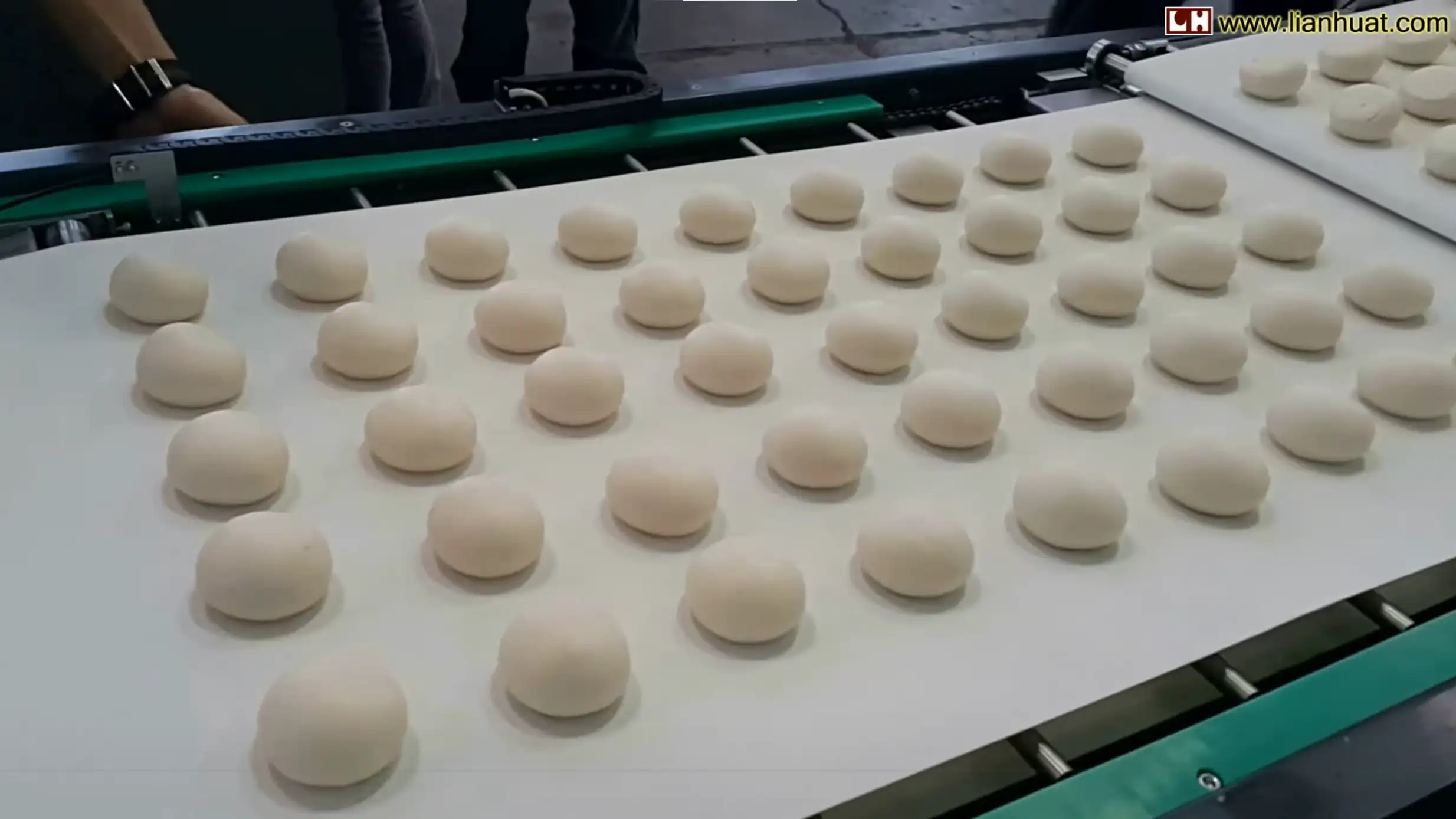
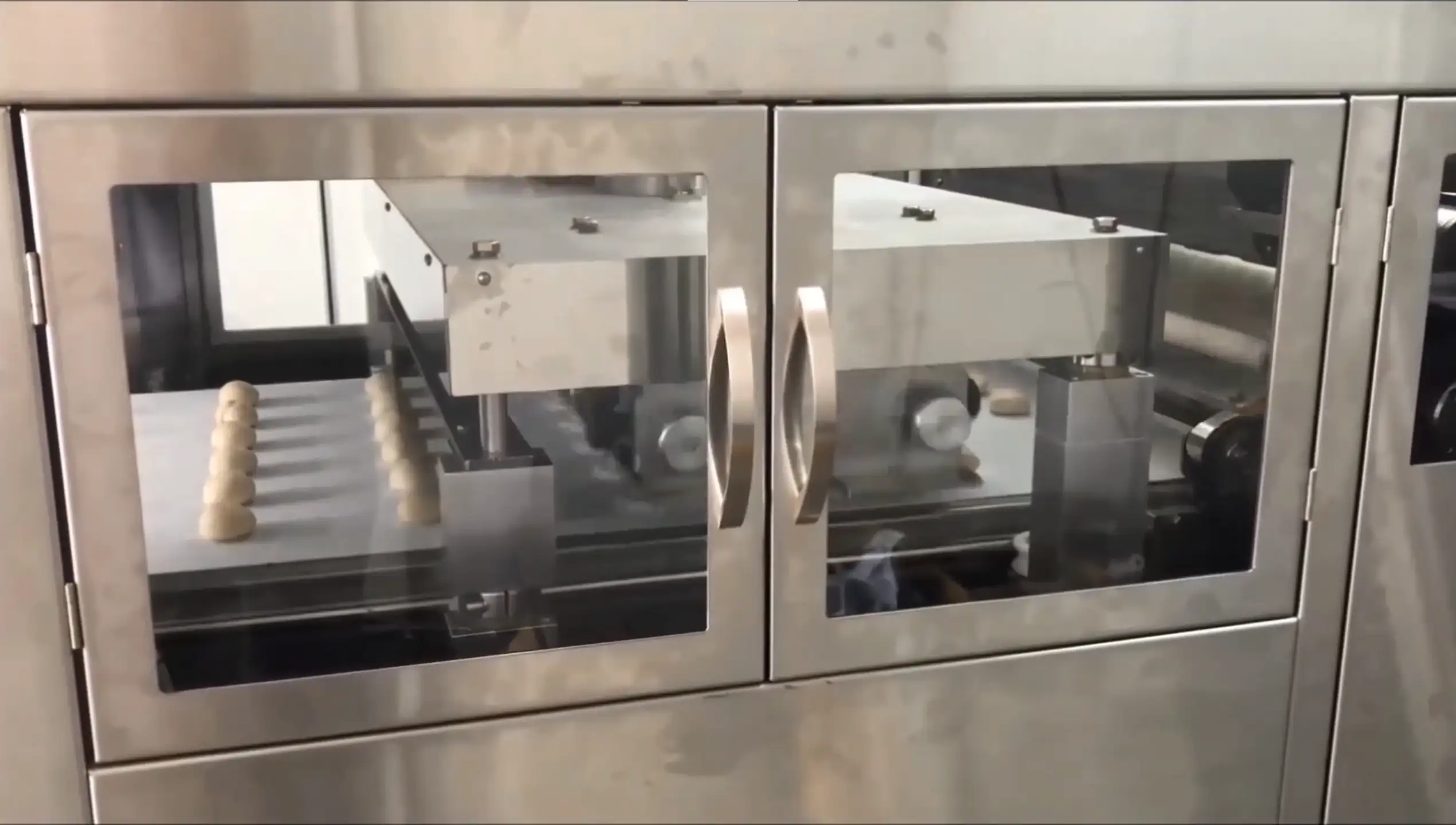
Product Videos
Frequently Asked Questions
Customers should provide the dough piece weight, dough formulation, baking tray specifications and details of the upstream machine. Product samples, tray samples or photographs may also be useful where additional clarification is required.
This information helps Lian Huat evaluate a suitable configuration for the intended application.
This information helps Lian Huat evaluate a suitable configuration for the intended application.
The Auto Panning System can be assessed for connection to an existing dough divider rounder or other suitable upstream equipment, including encrusting machines. Suitability depends on the machine's output arrangement, product-handling requirements and the intended panning configuration. Compatibility should be confirmed through technical evaluation.
Not necessarily. Differences in dough piece weight, dough formulation, tray specifications and upstream equipment may affect the required system configuration. The relevant application details should be evaluated before the final specifications are confirmed.
The control arrangement depends on the upstream equipment, output characteristics and intended production sequence. The appropriate control method is determined during project evaluation, and the specific functions must be confirmed for the proposed configuration.
Not finding what you're looking for?
Rest assured. You can easily connect with us by leaving a message,
calling our hotline, or emailing us.