
What 60+ Years of Bakery Machinery Manufacturing Has Taught Us About Dough Handling
What 60+ Years of Bakery Machinery Manufacturing Has Taught Us About Dough Handling
In bakery production, machinery is often evaluated by specifications such as production capacity, dough weight range, machine dimensions and automation level. These specifications are important, but they do not tell the whole story.
A machine may be designed to produce thousands of pieces per hour, yet achieving consistent production depends on much more than the machine's rated capacity. Dough characteristics, process conditions, machine configuration and the interaction between different stages of production can all affect the final result.
After more than six decades of manufacturing bakery machinery, we have found that effective automation starts with understanding the production process itself.
Dough Behaviour Matters as Much as Machine Specifications
Dough is not a uniform material. Its behaviour can change significantly depending on its formulation and processing conditions.
Factors such as:
Flour characteristics
Hydration level
Sugar and fat content
Dough temperature
Gluten development
Mixing conditions
Fermentation method
Dough resting time
can all influence how dough behaves during dividing, rounding, sheeting, forming and other processes.
For example, a dough that performs well during manual handling may behave differently when introduced into an automated dividing or rounding process. Dough that is too soft, too stiff or insufficiently developed may affect feeding consistency, portioning accuracy or rounding performance.
This is why machine selection should not be based on dough weight alone. The dough itself is part of the production requirement.
Rated Capacity Does Not Tell the Whole Story
Production capacity is one of the first specifications considered when evaluating bakery machinery.
However, a stated capacity represents a machine's designed production capability under suitable operating conditions. It should not automatically be interpreted as the actual output that every bakery will achieve.
Actual production performance can be influenced by:
Dough condition
Product size and weight
Feeding consistency
Machine configuration
Operator workflow
Upstream equipment
Downstream equipment
Product changeover requirements
For example, a dough divider rated for a particular number of pieces per hour still depends on consistent dough feeding and suitable dough characteristics to maintain stable operation.
The same principle applies to complete production lines. The output of one machine does not necessarily determine the output of the entire line.
For this reason, production capacity should always be considered together with the process conditions required to achieve it.
Bakery Machinery Works as Part of a Process
A bakery production system is rarely made up of one machine operating independently.
A typical production process may involve several stages:
Mixing → Dough Handling → Dividing → Rounding → Intermediate Proofing → Forming → Baking → Cooling → Packaging
Each stage can influence the next.
For example, if dough pieces leave the dividing stage inconsistently, the rounding process may have to compensate for variations that originated earlier in the line. Similarly, increasing the output of one machine without considering the capacity of downstream equipment may simply move the production bottleneck to another stage.
This is why machinery should be evaluated as part of the overall production flow rather than as an isolated piece of equipment.
Different Production Requirements Require Different Configurations
There is rarely one machine configuration that is ideal for every bakery.
Two bakeries may produce similar products but have different requirements because of differences in:
Production volume
Product dimensions
Dough formulation
Available factory space
Existing machinery
Labour arrangement
Automation level
Future expansion plans
A bakery producing several product sizes may require a different configuration from a bakery focused on one high-volume product.
Likewise, a manufacturer integrating new equipment into an existing production line may have different requirements from a new factory designing its production flow from the beginning.
In these situations, customization is not simply about adding features. It should have a clear production purpose.
The objective is to make the machinery work within the customer's production environment.
Customization Should Solve a Production Requirement
Customized machinery is sometimes necessary when standard configurations cannot fully match a specific production process.
The reason for customization may include:
Integration with existing equipment
Different product dimensions
Specific production capacity
Factory layout limitations
Special dough-handling requirements
Additional automation
Future production expansion
A useful customization should solve a practical problem.
For example, adding a conveyor, intermediate process or additional automation may be appropriate when it improves material flow or reduces manual handling. On the other hand, adding unnecessary complexity can increase maintenance requirements without providing a meaningful production benefit.
Good machine design therefore involves understanding not only what can be automated, but also what should be automated.
What We Look at Before Recommending a Machine
Before determining a suitable bakery machinery configuration, several questions should be considered.
Product Requirements
What product is being produced?
What is the target dough weight?
What shape and dimensions are required?
How consistent does the finished product need to be?
Dough Characteristics
What is the dough formulation?
What is the hydration level?
How much sugar, fat or oil is used?
What is the dough temperature?
How is the dough mixed and fermented?
Production Requirements
What is the target output?
How many operating hours are required?
What equipment is already available?
How many operators are involved in the process?
Is future capacity expansion expected?
Factory Requirements
How much floor space is available?
Where will the machine be positioned?
How will materials move between processes?
What cleaning and maintenance access is required?
How will the new machine integrate with the existing production flow?
These questions may appear straightforward, but they can significantly affect the appropriate machine configuration.
Engineering Experience Comes From Real Production Conditions
Machine design does not end when a machine leaves the factory.
Installation, commissioning, troubleshooting, maintenance and customer feedback can all provide useful information for future machine development.
Different production environments can expose different challenges. A machine installed in one country may operate under different production conditions from the same type of machine installed elsewhere.
Over time, these experiences contribute to a broader understanding of:
Dough handling behaviour
Machine wear and maintenance
Production bottlenecks
Operator requirements
Line integration
Environmental conditions
Practical automation requirements
This is one reason manufacturing experience matters.
Experience is not simply the number of years a company has existed. It is the accumulated knowledge gained from designing, manufacturing, installing, servicing and continuously improving machinery in real production environments.
Looking Beyond the Machine
Bakery automation is sometimes viewed simply as replacing a manual operation with a machine.
In practice, successful automation requires a broader approach.
The machine needs to work with the dough, the product, the operators and the rest of the production line. Its capacity needs to match the actual production requirement, while its configuration needs to remain practical for operation and maintenance.
There may also be trade-offs between speed, flexibility, automation, footprint, investment and future expandability.
There is therefore no single configuration that is automatically suitable for every bakery.
The right approach is to understand the production requirement first, then determine how machinery can support it.
Six Decades of Bakery Machinery Manufacturing
Established in 1960, Lian Huat has spent more than six decades manufacturing bakery machinery for different production requirements and applications.
This experience has developed through more than machine manufacturing alone. It includes engineering, production, installation, after-sales service and continuous interaction with bakery manufacturers in different markets.
For us, this experience reinforces a simple principle:
Bakery machinery should be designed around the production process, not simply around the machine itself.
As bakery production continues to evolve, automation will also continue to develop. The challenge is not simply to produce machines with higher speeds or more functions, but to develop practical solutions that deliver consistent performance within the conditions of a real bakery.
For manufacturers considering automation, understanding the product, dough, production flow and future requirements is an important starting point.
Looking for a bakery machinery solution? Share your product and production requirements with our engineering team to discuss a suitable configuration.
Recent Posts
See All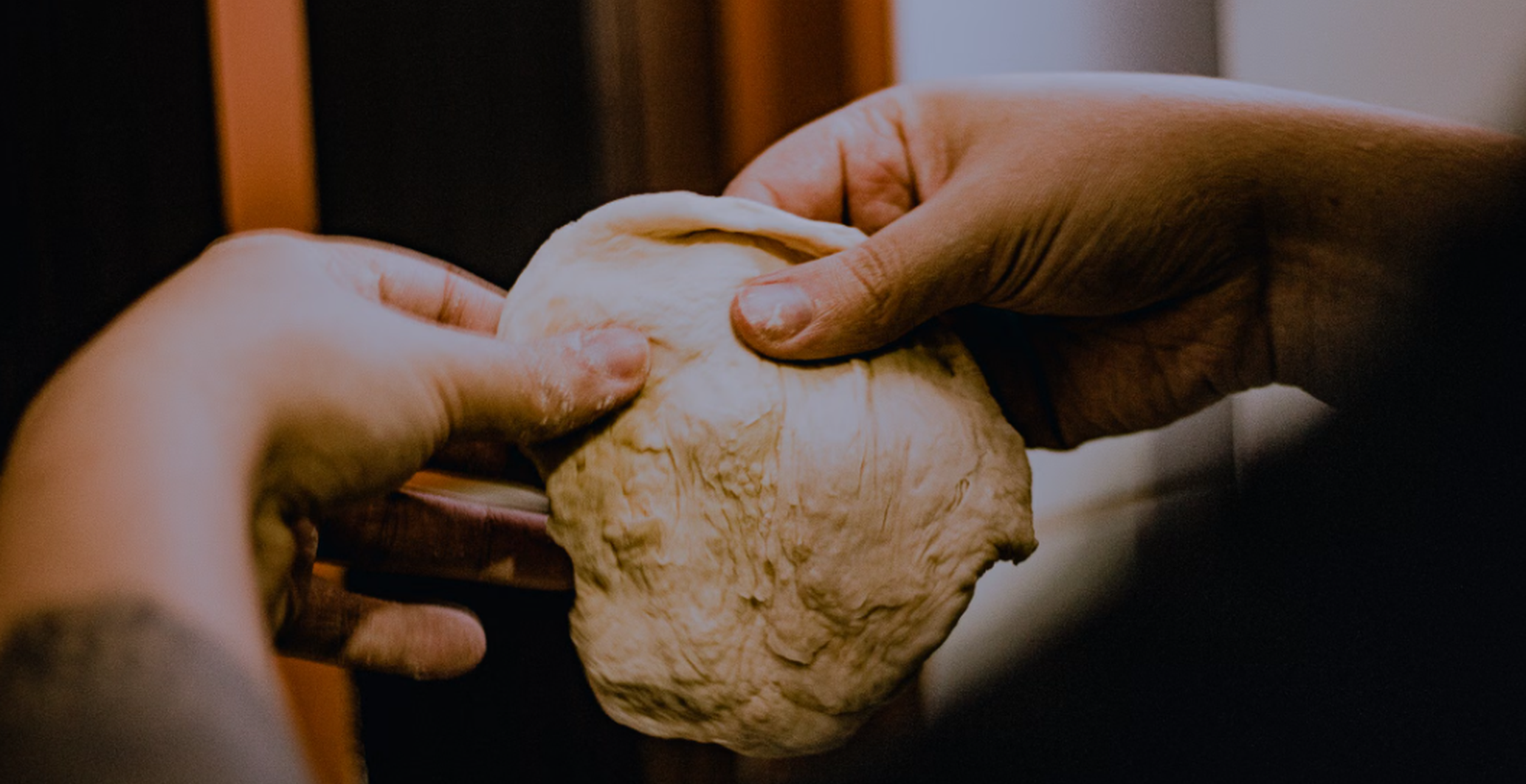
Henrick Low •
Oct 7, 2026 •
8 minutes read
Beyond Dough Hydration: How International Bakery Projects Shape Our Engineering Evaluation
How international bakery projects and servicing experience shape Lian Huat’s approach to evaluating dough characteristics and machinery requirements.
Read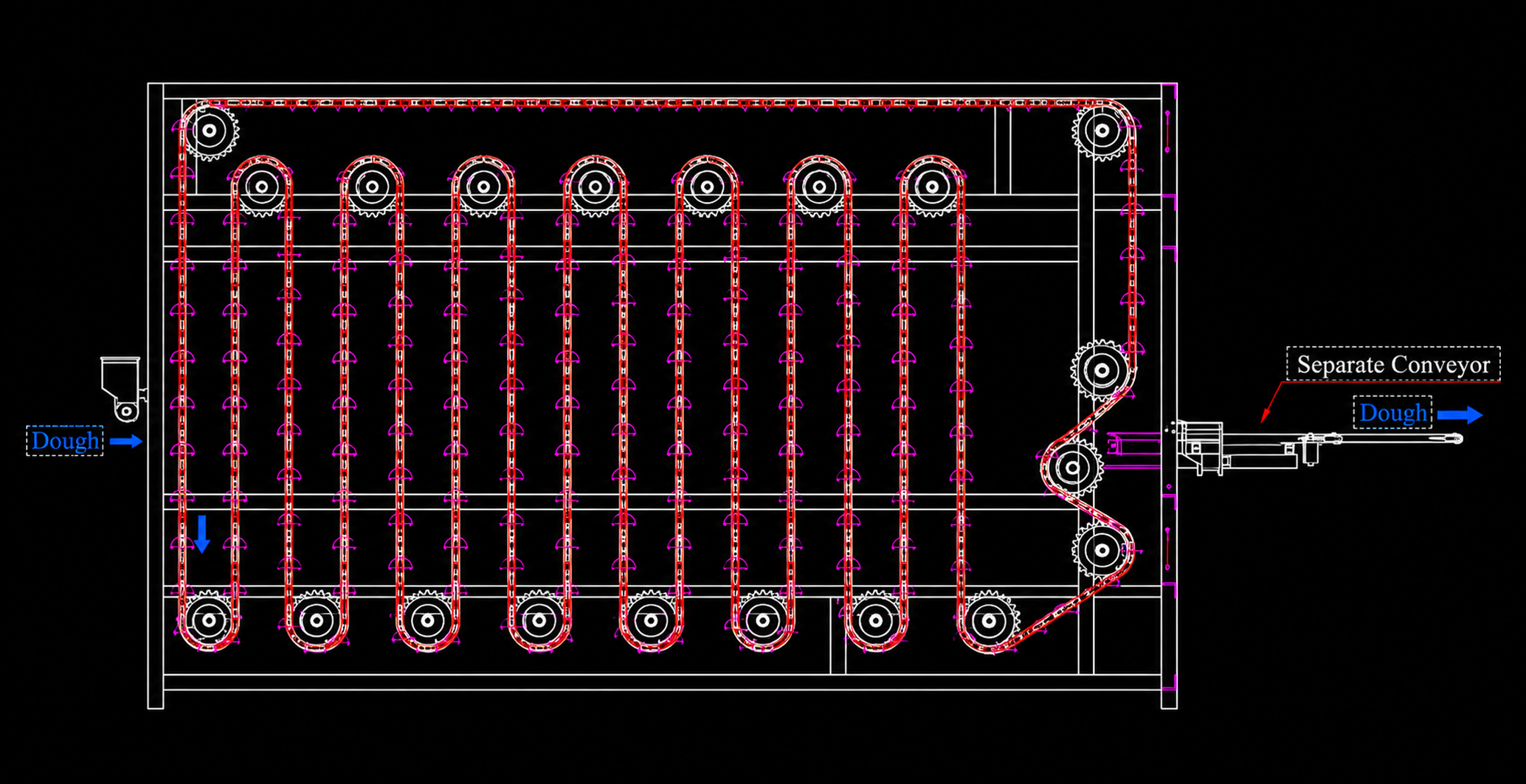
Henrick Low •
Sep 30, 2026 •
5 minutes read
Case Study: Designing a T-Shaped Intermediate Proofer for a Space-Constrained Bakery in Sri Lanka
A customized T-shaped intermediate proofer developed for a Sri Lankan bakery to automate proofing within limited installation space.
Read
Henrick Low •
Sep 29, 2026 •
5 minutes read
Case Study: Customizing Bakery Machinery for Easier Operation and Flexible Servicing in Taiwan
A Taiwan case study on customizing a machine's control system around the customer's operational and servicing requirements.
Read